
Dr. Peter H. Seeberger presents From Synthetic Sugars as Basis for Vaccines, Diagnostics and Therapeutics to Creating a Circular Chemical Economy
Date
Monday June 1, 202611:30 am - 12:30 pm
Location
Chernoff Hall, Room 117From Synthetic Sugars as Basis for Vaccines, Diagnostics and Therapeutics to Creating a Circular Chemical Economy
Peter H. Seeberger
Max-Planck Institute for Colloids and Interfaces Am Mühlenberg 1, 14476 Potsdam (Germany)
Center for the Transformation of Chemistry (CTC), R.-Wagner-Str. 7a, 04509 Delitzsch
peter.seeberger@mpikg.mpg.de and peter.seeberger@ctc-germany.org
Following its discovery over two decades ago,1 automated glycan assembly (AGA)2 has been developed into a robust and reliable technology that allows for preparation of diverse oligo- and polysaccharides3 on a solid support employing a synthesizer.4 Access to ever more complex glycans enables fundamental investigations into the structure and function of polysaccharide materials, vaccines and diagnostics.
Vaccine programs aimed at protection from most bacteria and fungi found on the WHO list of the most critical microbial threats are underway. A vaccine candidate against C. difficile has passed Phase 1 human clinical trials.5 Vaccine candidates against a host of other pathogens are the basis for the creation of a new vaccine venture.
Synthetic oligosaccharides have given rise to monoclonal antibodies to kill cancer cells. These antibodies are currently in preclinical development. 6
The Center for the Transformation of Chemistry is focusing on two “moonshots” developing a completely automated “self-driving” laboratory to accelerate the development of drugs and materials6 and a completely recyclable car. 7
References
1. Plante, O.J.; Palmacci, E.R.; Seeberger, P.H.; Science 2001, 291, 1523.
2. Guberman, M.; Seeberger, P.H.; J. Am. Chem. Soc., 2019, 141, 5581.
3. Joseph, A.; Pardo-Vargas, A.; Seeberger, P.H.; J. Am. Chem. Soc., 2020, 142, 8561.
4. Hahm, H.S.; Schlegel, M.K.; Hurevich, M.; Eller, S.; Schuhmacher, F.; Hofmann, J.; Pagel, K.; Seeberger, P.H.; Proc Nat Acad Sci USA, 2017, 114, E3385.
5. Martin, C.E.; Broecker, F.; Oberli, M.A.; …..Seeberger, P.H.; J. Am. Chem. Soc. 2013, 135, 9713; Broecker, F.; Hanske, J.;…. Seeberger, P.H.; Nature Comm. 2016, 7, 11224; Broecker, F.; Martin, C.E.; Anish, C.; Seeberger, P.H.; Cell Chem. Bio. 2016, 23, 1014.
6. Goerdeler, F.; Reuber, E.; Lühle, J.; Leichnitz, S.; Freitag, A.; Nedielkov, R.; Möller, H.; Seeberger, P.H.; Moscovitz, O.; ACS Cent. Sci. 2023, 9, 1111.
7. Plutschack, M.B.; Seeberger, P.H.; Green Chem., 2024, 26, 7443
8. Schoemaker, R.; Sun, C.; Chiarugi, D.; Tyrikos-Ergas, T.; Seeberger, P.H.; ACS Centr. Sci. 2025, 11, 1052.
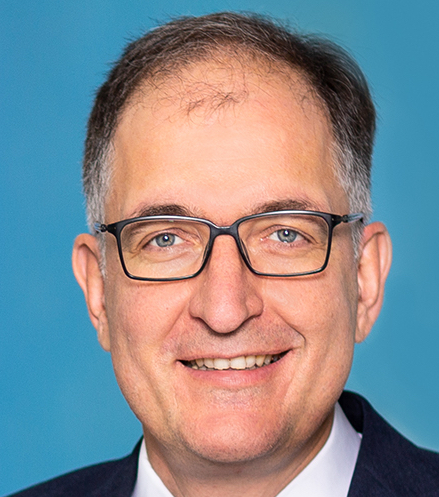 Peter H. Seeberger, a chemist, was a tenured professor at MIT and ETH Zurich before becoming director at the Max-Planck Institute in Potsdam in 2009. Since 2021, he is in addition a Vice President of the German Research Foundation (DFG) and since 2023 the Founding Director of the Center for the Transformation of Chemistry (CTC) that received initial funding of €1.25 billion. His research spanning topics from engineering to immunology has been documented in >720 journal articles and >60 patent families and was recognized with >40 international awards.
Peter Seeberger supports diamond open access publishing as the Editor-in-Chief of the Beilstein Journal of Organic Chemistry. He is a co-founder of several successful companies.