
Message from the Head of the Department
Do you care about preventing pollution, combatting disease, promoting recycling over waste, and reducing harm to people and the environment? Chemistry is a powerful tool for the greater good, if it is used wisely. With our focus on sustainability and education, we can make a positive change. If you’re looking for undergraduate or graduate-level education, or a member of the public/industry/government, please ask me how Chemistry at Queen’s can help.
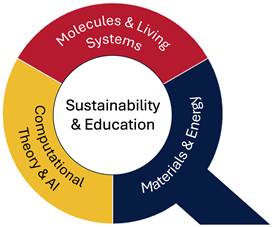
The Department of Chemistry commits to excellence and innovation in research and teaching, fosters diversity of perspectives in our students and faculty, and works to address global challenges through interdisciplinary partnerships and inclusive solutions in which sustainability and education underpin sector-leading work in materials & energy, molecules & living systems, and computational theory & artificial intelligence.
The Department of Chemistry at Queen’s University is situated on traditional Anishinaabe and Haudenosaunee Territory. We acknowledge this territory’s significance for the Indigenous Peoples whose practices and spiritualities are tied to respect for the land. We can honour that respect for the land by doing our utmost, in our research and teaching, to further the goals of sustainability and by recognizing the effect that chemistry can have, for better or worse, on the environment.
Our focus on sustainability means we’re dedicated to using chemistry to solve problems facing society and the environment. Learn how chemistry can help! We offer various undergraduate degrees in Chemistry, as well as joint degrees with Environmental Studies (the BSc in Environmental Chemistry) and with Chemical Engineering (the BASc in Engineering Chemistry). Undergraduates have many opportunities to try their hands at research: as volunteers, as paid summer researchers, or for their 4th year research thesis. Our recent graduates have an impressive 100% employment rate after 6 months and after 2 years post-graduation. The courses we offer to our graduate students include, in addition to the obvious chemistry topics, soft skills such as research management and scientific communication – these are greatly valued by future employers of our students. Applicants for graduate studies can choose an MSc, a PhD (either after an MSc or direct entry after a BSc), an accelerated MSc, or a joint MSc with the University of Stuttgart.
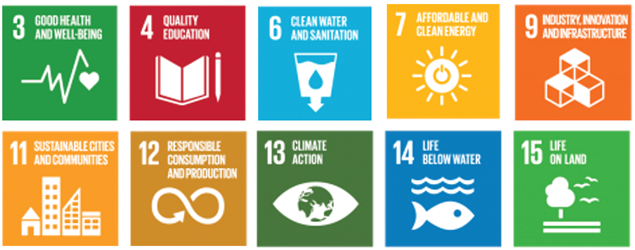
Queen’s University is ranked 6th in the world and 1st in Canada by the Times Higher Education Impact Ratings for advancing sustainability. Our faculty and alumni were instrumental in creating GreenCentre Canada and RXN HUB, organizations dedicated to the commercialization of green chemistry technologies. Kingston ranks 1st in Canada (and 10th in the world) for the strength of its startup company ecosystem in clean and green technologies.. Our research directly addresses many of the UN sustainability goals, while researchers in fundamental chemistry further humanity’s understanding of how chemistry works.
The professors in our Department win more national awards for excellence, per professor, than any other chemistry department in Ontario. Our world class research and instrumentation facilities are used by researchers from departments across campus. Our faculty, students, and postdoctoral fellows perform interdisciplinary research in collaboration with experts around the world; two thirds of our published papers have an international coauthor. In addition, our department includes four cutting-edge research centres and institutes:
The Carbon-to-Metal-Coatings Institute (C2MCI) aims to develop coating materials that will enhance the stability of metals used in transportation, electronics, and precision medicine, reducing corrosion and wastage.
Open Plastic is a Genome Canada funded program dedicated to finding a biological solution to reduce waste plastic.
The Contaminants of Emerging Concern - Research Excellence Network (CEC) is a research network focused on the detection and treatment of emerging contaminants in the environment that pose environmental and human health risks.
The NSERC CREATE to Transform Scientific Computing Training to Advance Molecular Modeling in the Age of Artificial Intelligence is a joint McMaster/Queen’s initiative to modernize molecular modeling in the age of AI.
In the Department, we are making great strides towards equity, although of course we have plenty of work still to do. Representation of women, indigenous persons, visible minorities, and persons with disabilities are higher in the students of our Department than in Queen’s as a whole. Women are well represented amongst our faculty, compared to chemistry departments at other universities in Canada. We have 100% compliance in the required I-EDIAA training for faculty and staff. Student groups are collaborating with the Department to improve equity and awareness.
When seeking new employees, employers are increasingly seeking the following skills: environmental stewardship, technological literacy/AI, creative thinking, and analytical thinking. To learn more about how a degree in chemistry from Queen’s will empower you for a future career, please contact me.
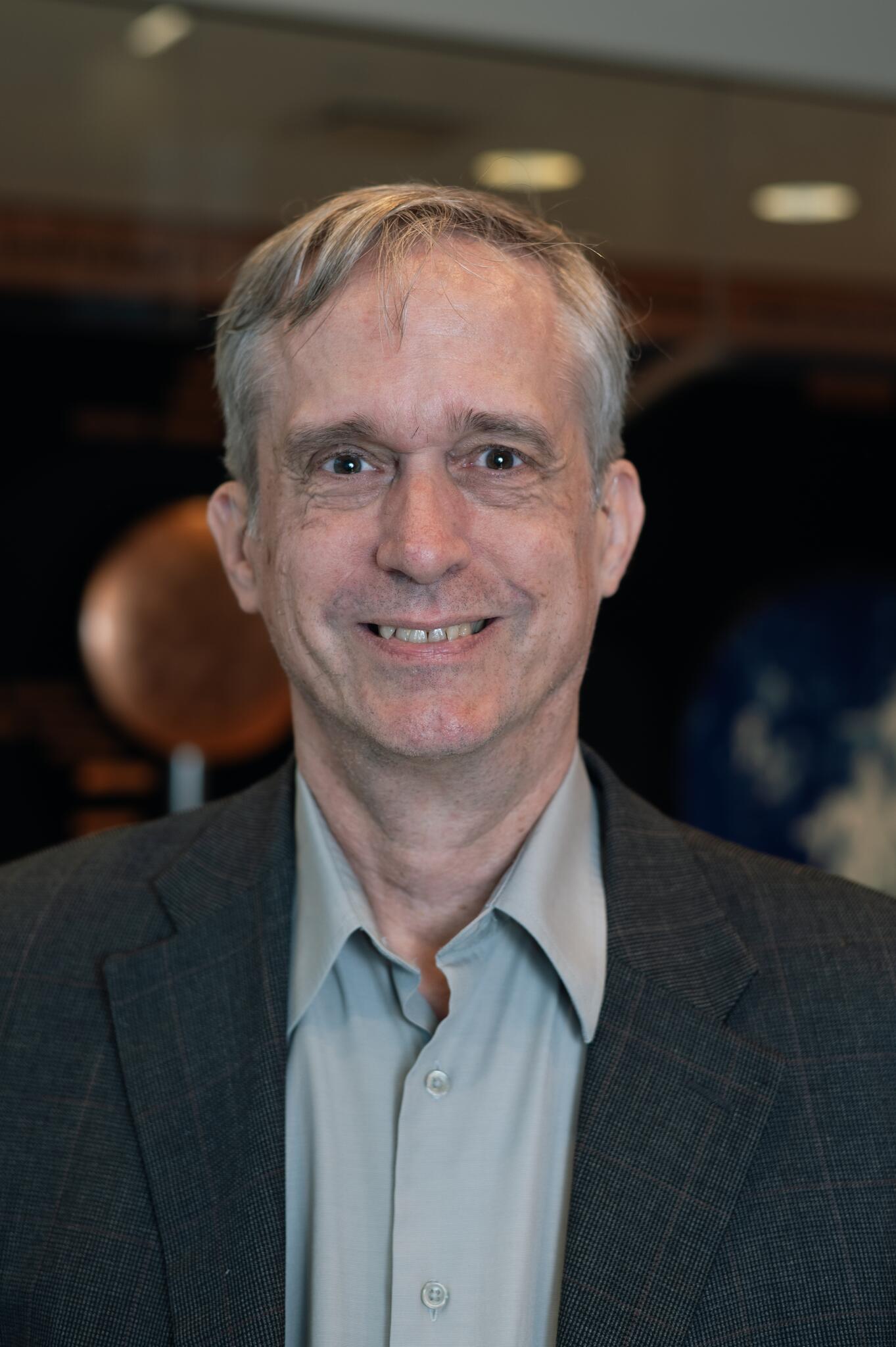
Philip Jessop, Head, Department of Chemistry